Article - March 5, 2024
Transmission and distribution (T&D) infrastructure is the backbone of the modern electrical grid. Throughout this vast network, significant upgrades, replacements, and expansions are needed to increase its reliability and capacity. As such, billions of dollars are being spent on power equipment and components, positioning the sector for long-term growth.
In this article, senior professionals from our Energy, Power & Infrastructure Group discuss what’s driving investor interest in power components and substation products. They also highlight how recent Harris Williams client Systems Control exemplifies the value-creation potential in the sector.
Demand Outpacing Supply
Several macro trends are driving higher spending across T&D infrastructure:
Aging infrastructure needs to be revitalized or replaced to mitigate failure rates and costly outages.
Investment in grid resiliency and durability is more urgent due to increasingly common extreme weather and natural disasters.
The growth of renewable energy requires greater investment in grid infrastructure to bring wind and solar sources online.
Energy-intensive sectors like data centers and electric vehicles have a rising need for grid capacity and resilience.
“Federal governments across the U.S. and E.U. recognize the criticality of these challenges,” says Drew Spitzer, a managing director. “They are pushing large amounts of money into the system and passing sweeping legislation that is expected to drive both near- and long-term infrastructure spending.”
This increased T&D funding is spurring strong demand for power equipment and components, causing a significant supply and demand imbalance through the ecosystem. A lack of sufficient manufacturing capacity to meet demand has resulted in elongated lead times and backlogs. And while the pandemic exacerbated the imbalance, a more permanent shift has materialized with buyers becoming more proactive in planning their capital employment cycles.
Matt White, a managing director, notes that utilities are building longer lead-time mentalities into their buying patterns. “They are often thinking years in advance, which creates lengthy backlogs of contracted revenue for power component suppliers,” he says. “This shift gives them great long-term demand visibility—a trait investors highly value in acquisition targets, particularly during heightened periods of uncertainty.”
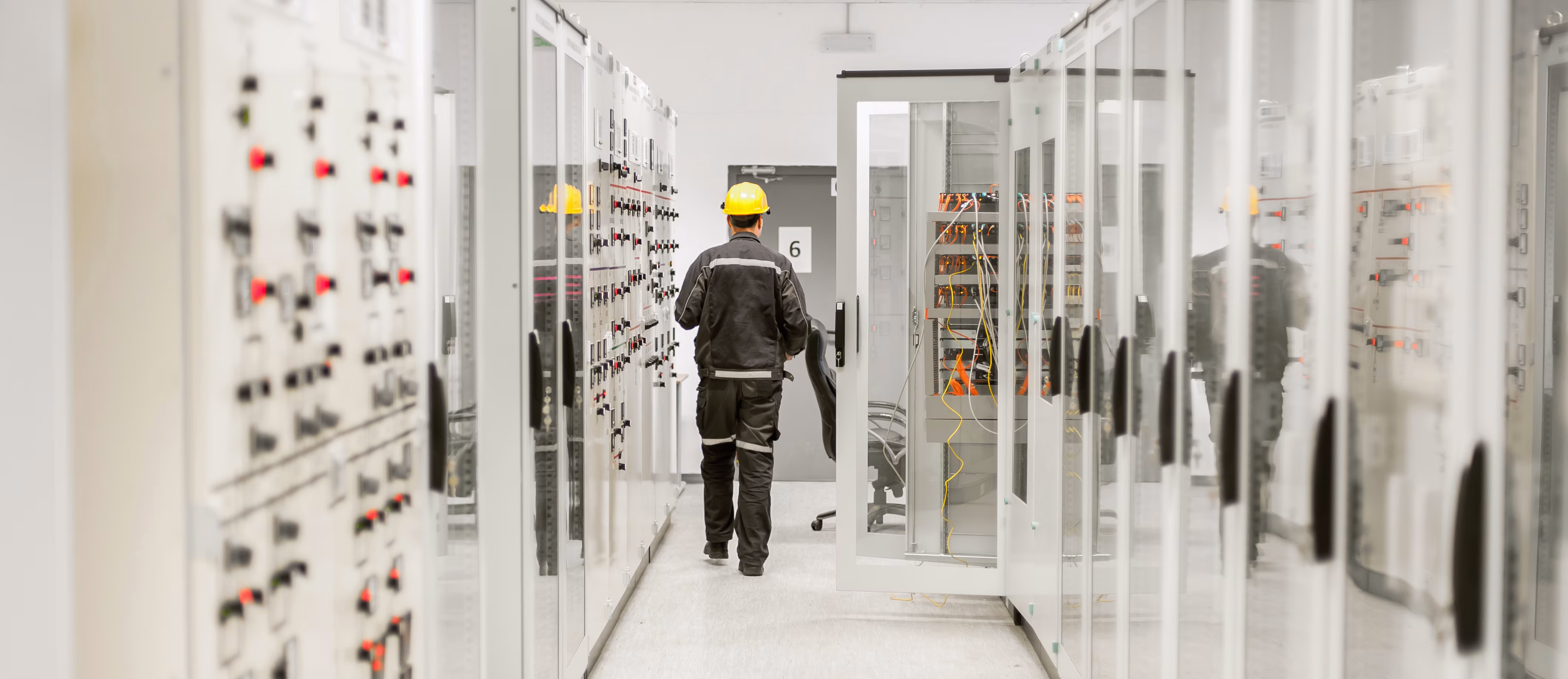
Substation products are particularly critical to a safe and reliable power supply and are capitalizing on the T&D industry’s growth. These products—including busbars, power transformers, circuit breakers, switchgear, insulators, enclosures, and control and relay panels—support the stepping up and stepping down of voltages within the electrical grid by being the intermediate connection point between T&D infrastructure.
“Within power components, substation products is a multi-billion-dollar addressable market alone,” says Thomas Saunders, a director. A large percentage of substations in the U.S. today are at or near the end of their useful life, and the remaining substations require grid-hardening investments. At the same time, electricity demand and renewable generation, along with population growth and migration, are underpinning a robust forecast for substation new builds.
“These factors are driving substantial demand, and companies that can produce high-quality engineered solutions in this segment will continue to take share and drive outsized growth,” he continues.
Systems Control: Mission-Critical Solutions
Recent Harris Williams client Systems Control sheds light on the growth opportunities within substation products. The company is a leading provider of customized, highly engineered control and relay panels and electrical substation control buildings.
Systems Control separates itself in the market through its advanced design, engineering, manufacturing, and testing capabilities for the substation protection and control value chain. “Systems Control serves the most complex, mission-critical equipment for the nation’s power grid,” explains Neha Shah, a director. “This intricate work has a high cost of failure, requiring the specialized skillsets of companies like System Control.”
“With its best-in-class manufacturing facilities and national reach, end-to-end technical expertise, and comprehensive range of products and value-added services, Systems Control is well positioned for continued growth,” she adds.
Due to its differentiated value proposition, Systems Control delivers superior customer experiences that result in strong customer adoption and entrenched customer relationships. Spitzer adds that the company’s unique strategic relationship development strategy incentivizes partnership and focuses on long-term value creation. “Systems Control creates blanket contracts with mutually beneficial terms and exclusivity over multi-year periods,” he explains. “This collaboration with customers on long-term plans has driven backlog growth and gives Systems Control visibility into future revenue.”
“Systems Control’s experienced management team has demonstrated its ability to create value at each stage of its growth,” summarizes White. “It has pushed the envelope on innovative solutions and long-term contracts, while making investments to scale the platform in a highly capacity-constrained segment.”
A Long-Term Need for Power Components
With T&D infrastructure tailwinds driving sustainable demand for power components, the segment will continue to grow. Investors should prioritize power components companies with a clear strategy to capture a greater share of this market or expand into adjacent markets, such as data centers or renewable energy.
Spitzer says that, like Systems Control, leading businesses also have a track record of building enduring customer relationships with cross-selling opportunities. "Achieving organic volume growth and maintaining margins through strategic pricing are other important levers for success,” he adds.
“Capacity constraints across the industry are likely to persist,” notes White. “There’s substantial value-creation potential for platforms that can meet demand and build scale as T&D infrastructure is revitalized, strengthened, and expanded in the decades to come.”
To discuss M&A opportunities within power components, please contact our senior professionals.