




Article - July 15, 2024
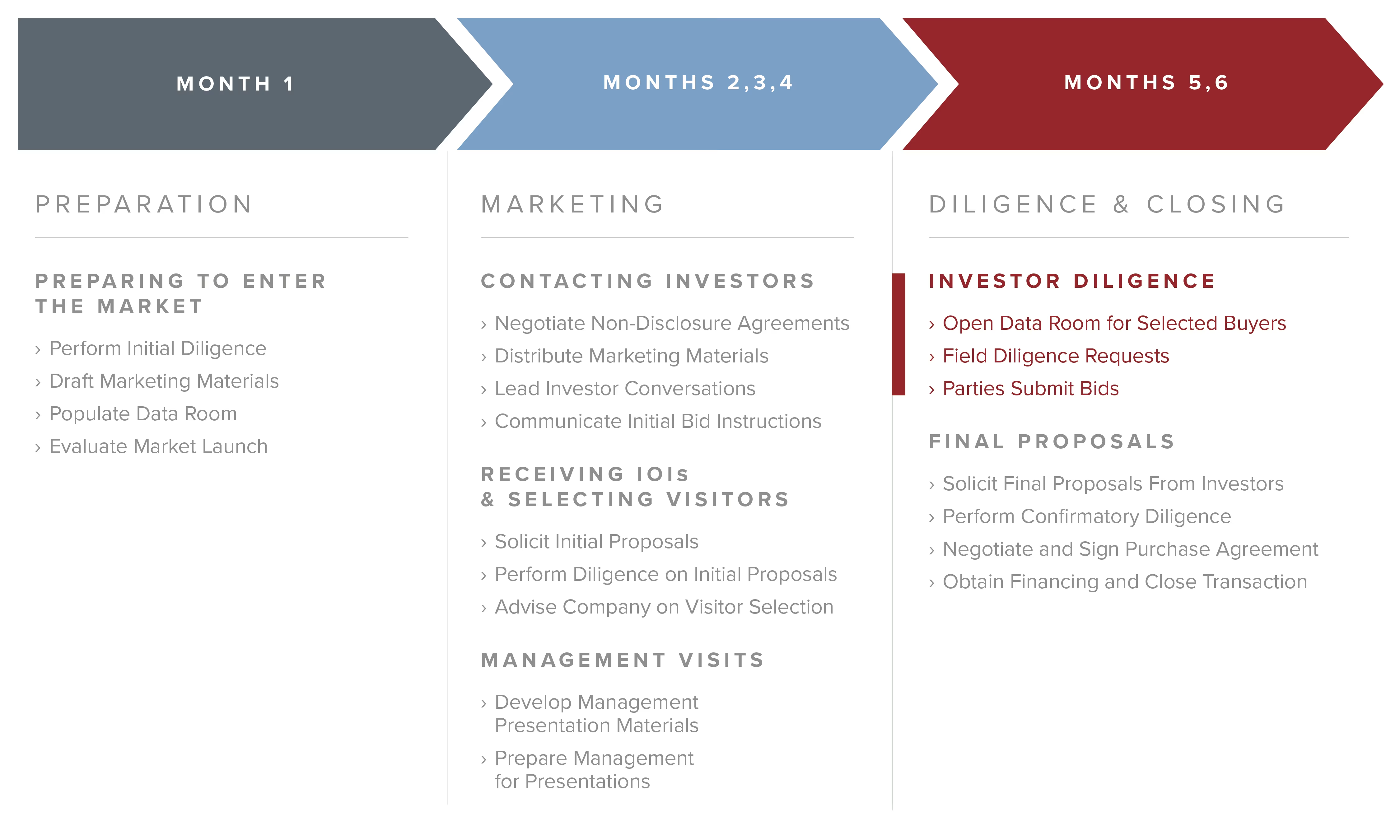
Buyer due diligence is a key step in an M&A transaction. And while diligence occurs late in a sale process, owner preparation must begin far in advance. The following checklist lays out three essential areas to cover within buyer due diligence.

1. Business
The broadest area of examination—business due diligence—verifies the strength of a company’s differentiation, value proposition, leadership team, operations, and growth projections. During this step, it's critical to prove that a business’ growth plan is robust and achievable with market opportunity for both organic growth and acquisitions.
“During the M&A process, buyers will ask many questions of a company to evaluate the potential of the acquisition,” says Larissa Rozycki, a managing director. “By preparing well in advance of a sale, leadership can get organized for business due diligence without significantly disrupting day-to-day operations and be ready to tell their equity story.”
2. Financial
Financial due diligence is also extensive, encompassing a detailed review of financial reporting, finance and accounting operations, systems, and controls, and the degree to which a company is following industry best practices.
Four essential areas merit specific attention:
Finance | Make certain a bridge between internal statements and audits/reviews can be made. Ensure revenue recognition policies comply with industry best practices. Clean up accruals and reserve in advance and consider appropriate working capital adjustments. Identify and document any potential add-backs, including personal and shareholder expenses or non-recurring operating expenses, such as salaries for shareholders that will not stay with the business post-sale. Obtain a quality of earnings report from a trusted, third-party advisor to validate the company’s earnings and provide a foundation for buyer analysis. Maintain pro forma financial results for recent acquisitions and track performance and synergies. |
Accounting & Tax | Confirm tax compliance and on-time filing of both federal and state taxes. Ensure the business can close its books within a reasonable amount of time. This demonstrates team depth and sophistication and the ability to maintain process momentum. |
Financial Systems & Controls | Prepare to describe the company’s financial reporting protocols and management information systems, while considering upgrades as appropriate. |
Insurance | Demonstrate that the company has adequate insurance coverage. Consider if there are ways to mitigate rising expenses, such as addressing issues with workers’ compensation insurance. |
3. Legal
Legal review covers every contractual, record-keeping, and intellectual property element of the business to identify and address potential ligation exposure.
“By knowing what to expect during buyer due diligence, leadership can identify potential issues or opportunities and minimize surprises,” says Bill Watkins, a managing director. “It's important to prepare early and work with an advisor to efficiently manage the magnitude of requested information and complexities that can arise.”
For more detailed information on the elements of buyer due diligence and the end-to-end M&A process, please contact our senior professionals.