Article - October 31, 2024
The fertility services sector gives hopeful parents a better chance of conceiving a child. For patients and investors alike, this is a meaningful opportunity.
Demand continues to increase for assisted reproductive technology (ART)—including in vitro fertilization (IVF), intrauterine insemination, and other treatment methods—giving rise to an expanding range of complementary fertility services that are well positioned for M&A.
Below, our senior professionals share what’s driving growth across the fertility landscape and how recent client Genetics & IVF Institute (GIVF) illustrates the sector’s investment potential.
Enhancing Fertility Treatments
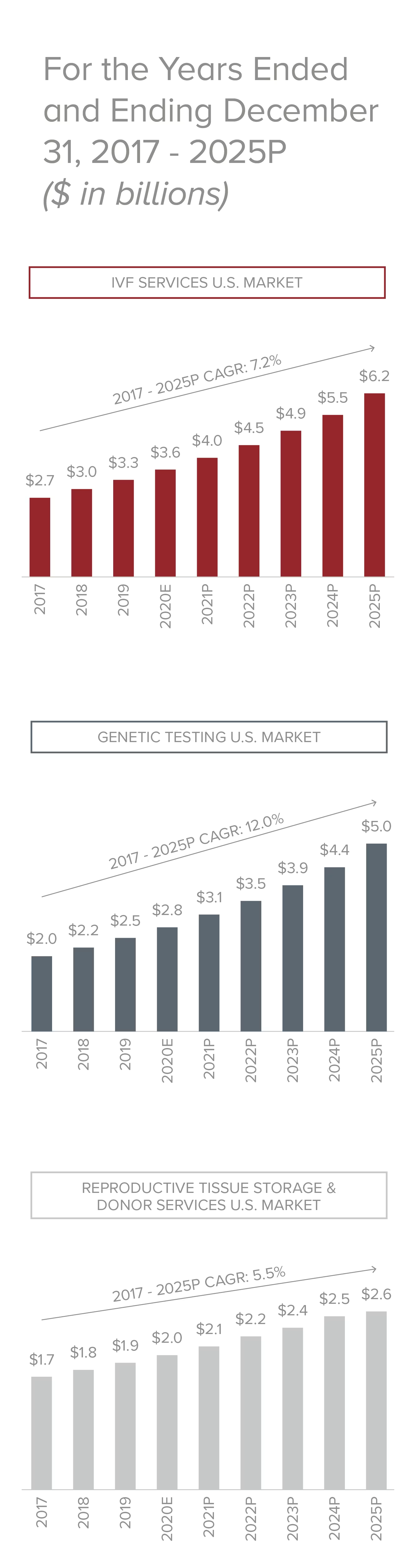
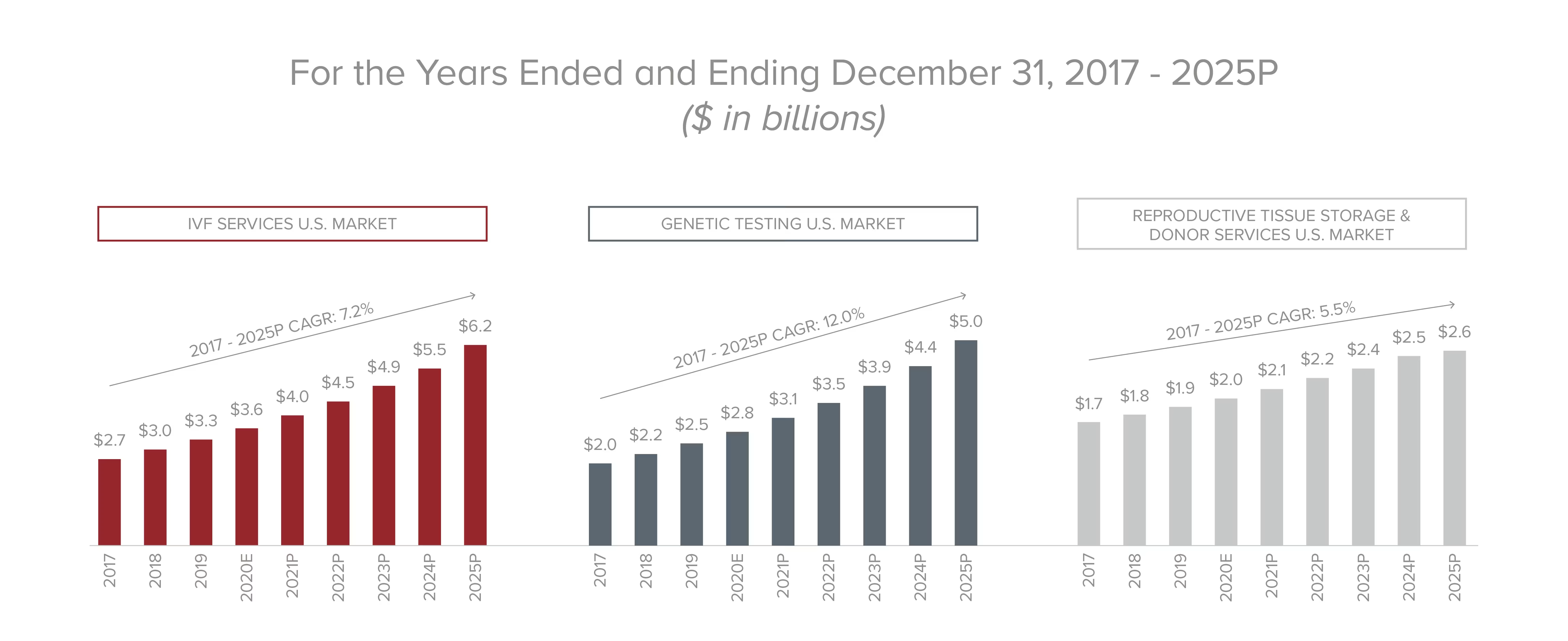
For many families, having children is a high priority and often time sensitive. This helps drive strong, resilient demand throughout the fertility sector, with the U.S. market already estimated at over $10 billion and IVF services alone projected to expand at 12% CAGR through 2025.¹
In addition, multiple long-term themes are supporting this broad market growth and larger volume of IVF treatments:
Increasing Awareness and Accessibility: Greater understanding of fertility treatments, combined with better technology and genetic testing, are improving success rates and lowering average costs to make treatment more accessible.
Cultural Shifts: Societal trends are resulting in more people requiring fertility services to conceive. For example, more women are having children later in life, while a larger population of same-sex couples and single mothers by choice are looking to have children.
Rising Chronic Health Conditions: Increasingly common chronic health issues, from obesity to genetic conditions, are contributing to higher incidences of infertility across genders.
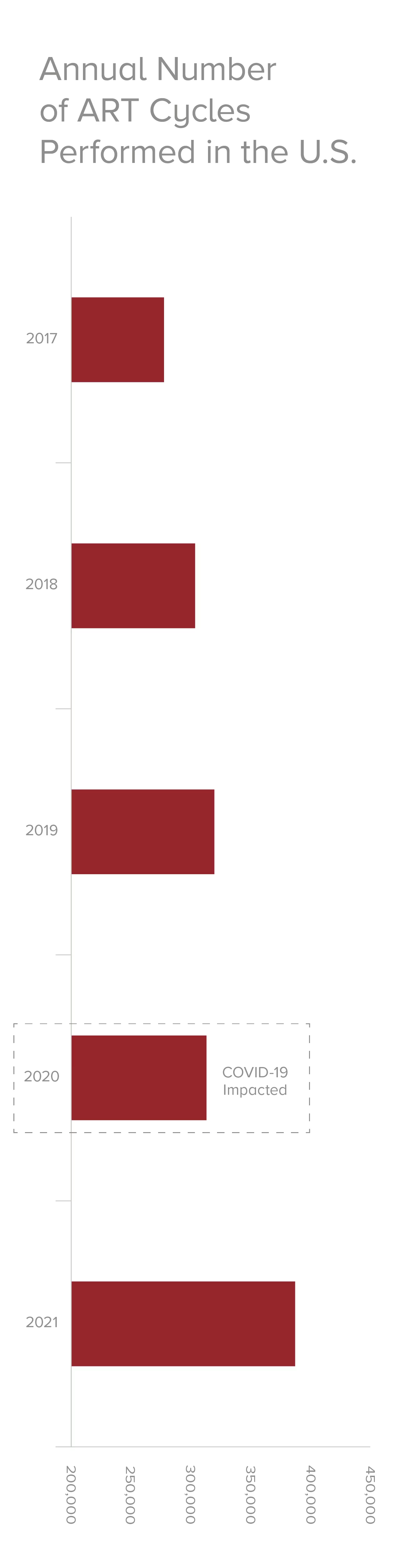
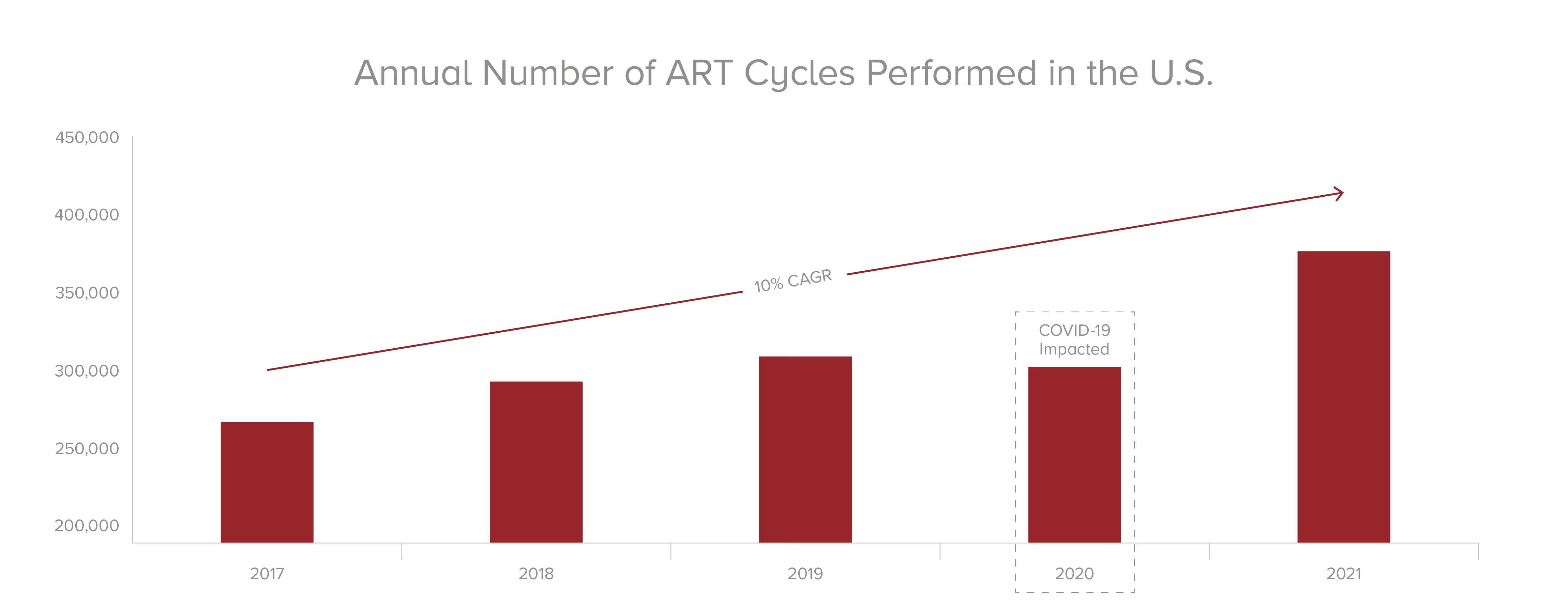
Source: CDC Data
Meanwhile, fertility science is constantly evolving. These advancements, coupled with higher demand for fertility treatments, are spurring a wider breadth of ancillary services for patients.
“Many clinics are providing a more holistic fertility offering that enhances the treatment experience and better supports a rising number of hopeful parents,” says Andy Dixon, a managing director. Several categories, such as genetic testing, long-term tissue storage, donor services, and surrogacy, illustrate the growth potential of these innovative and value-added services.
Source: Allied Market Research, Cision PR Newswire, Global Market Insights
As shown above, the fertility investment opportunity goes beyond IVF clinics and other treatment providers. While investor interest in high-performing providers remains strong, businesses focused on adjacent fertility services offer additional paths to tap into the sector’s growth.
“Investors have multiple ways to better support fertility patients. Providers can meet more patient needs by growing their service offering organically or acquiring clinics with complementary services,” explains Dixon. “Areas where we’ve seen specialized, non-provider companies succeed include donor tissue, long-term storage, surrogacy, fertility benefit management, and various B2B and B2C software solutions.”
In addition to being interested in fertility’s many avenues for value creation, investors are drawn to its fragmented landscape of local and regional clinics. “Scaled companies with a proven M&A strategy can build their reach and capture untapped demand for IVF and related services,” says Geoff Smith, a managing director. “There’s also a significant opportunity to capitalize on international expansion potential, with several companies notably serving patients across multiple countries and continents within their broader networks.”
GIVF: Delivering Exceptional Patient Outcomes
Genetics & IVF Institute is a fertility pioneer, delivering a broad range of complementary products and patient services that enable exceptional clinical outcomes.
The company operates a well-established donor sperm bank and state-of-the-art donor egg bank—under top multinational brands, including Fairfax Cryobank and Fairfax EggBank—while providing surrogacy services to further support its patients.
Through its leading reproductive tissue banks and related services, GIVF drives high clinical quality and positive patient experiences. “Clinics and patients value proven reproductive tissue banks with a long history of success like GIVF,” says Dixon. “The company’s donor and tissue quality, donor pool and catalog size and diversity, storage capacity, and customer service all contribute to its strong industry reputation and brand recognition.”
Meanwhile, GIVF has made significant investments in production and tissue inventory. Its expanding footprint of tissue bank production sites and partner egg retrieval clinics has created greater donor access while helping it meet donor selection criteria for all patient demographics and needs.
The company has also differentiated itself through its long-term dedication to innovation. GIVF has consistently achieved transformational research and development milestones, including being the first in the world to initiate ovarian cryopreservation for cancer patients and introducing non-surgical, ultrasound-guided egg retrieval for IVF in the U.S.
Due to these and other factors, GIVF is primed to capitalize on multiple attractive avenues for growth. “GIVF’s experienced leadership team and best-in-class infrastructure will support its expansion efforts, from continuing to build out more complementary service offerings to pursuing attractive growth opportunities via M&A,” says Dixon.
Meeting More Patient Needs
The large and fragmented fertility services sector is well positioned for M&A. Thanks to several demand drivers—including increasing fertility treatment awareness and accessibility, increasing prevalence of common chronic health conditions, and cultural shifts in attitudes about having children—fertility’s addressable market continues to grow.
“Fertility investment opportunities are plentiful and expanding,” says Dixon. “Platforms that can capture the rising demand for a wider range of complementary fertility services, from genetic testing and storage to donor banks and surrogacy, will be poised for long-term success.”
To discuss the M&A potential across the fertility and broader women’s health spaces, please contact our senior professionals.
Source: Allied Market Research, Cision PR Newswire, Global Market Insights