Article - August 8, 2024
After a prolonged period of double-digit growth, abundant biopharma funding, and rising sector valuations, the outsourced pharma services sector recently experienced a temporary slowdown. Yet recent market data—including a proprietary Harris Williams survey of outsourced pharma services executives—suggests that a new round of growth and innovation is underway.
Enforced Downtime
In recent quarters, many outsourced pharma services companies saw a dramatic deceleration, some for the first time. Several underwent headcount reductions, suffered significant losses, and sought new infusions of capital.
These developments were driven by cross-industry dynamics—including more expensive debt, reduced venture capital funding for small pharma and biotechs, and an IPO market slowdown—plus pharma-specific developments such as impending patent expiration of key therapeutics, evaluating and responding to the impacts of the Inflation Reduction Act, and reprioritizing pipelines post-COVID and in light of GLP-1 growth.
However, the environment is shifting again. Debt markets are increasingly supportive and many industries and subsectors are experiencing renewed vigor (Figure 1).
Figure 1: Expectations for Favorable Rate Environment
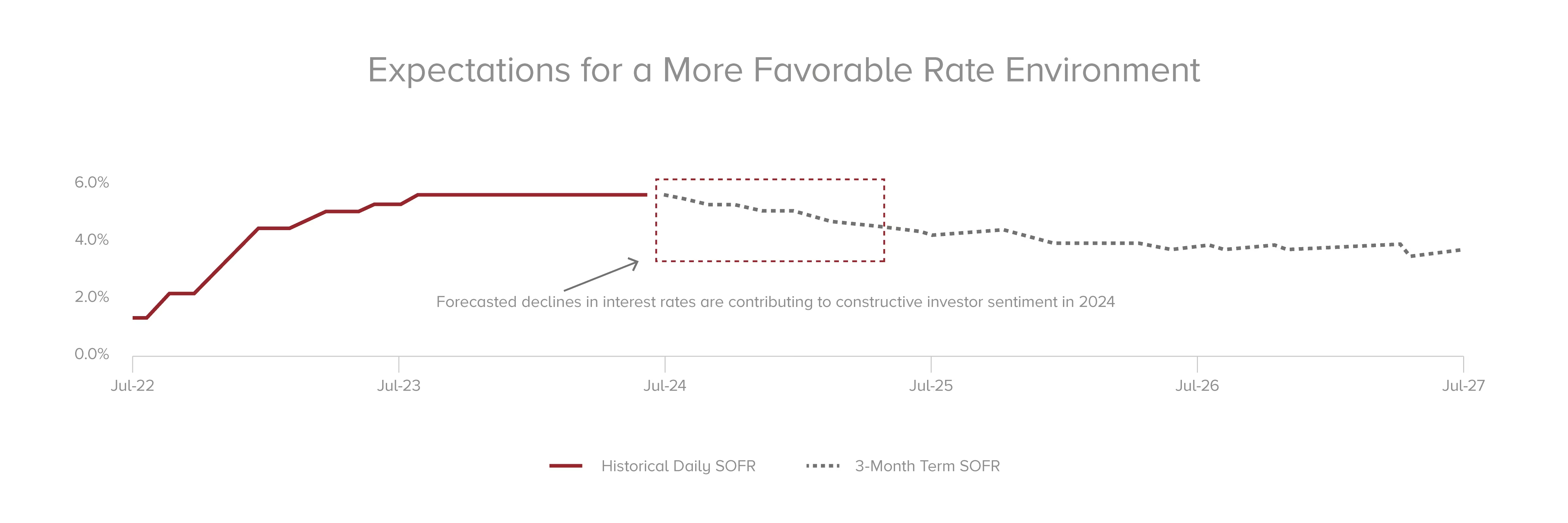
Source: Pensford Financial
Will this developing resurgence boost outsourced pharma services, and if so, when and to what extent? Based on the most recent trends in the space and data from a proprietary executive survey, there are many reasons for optimism.
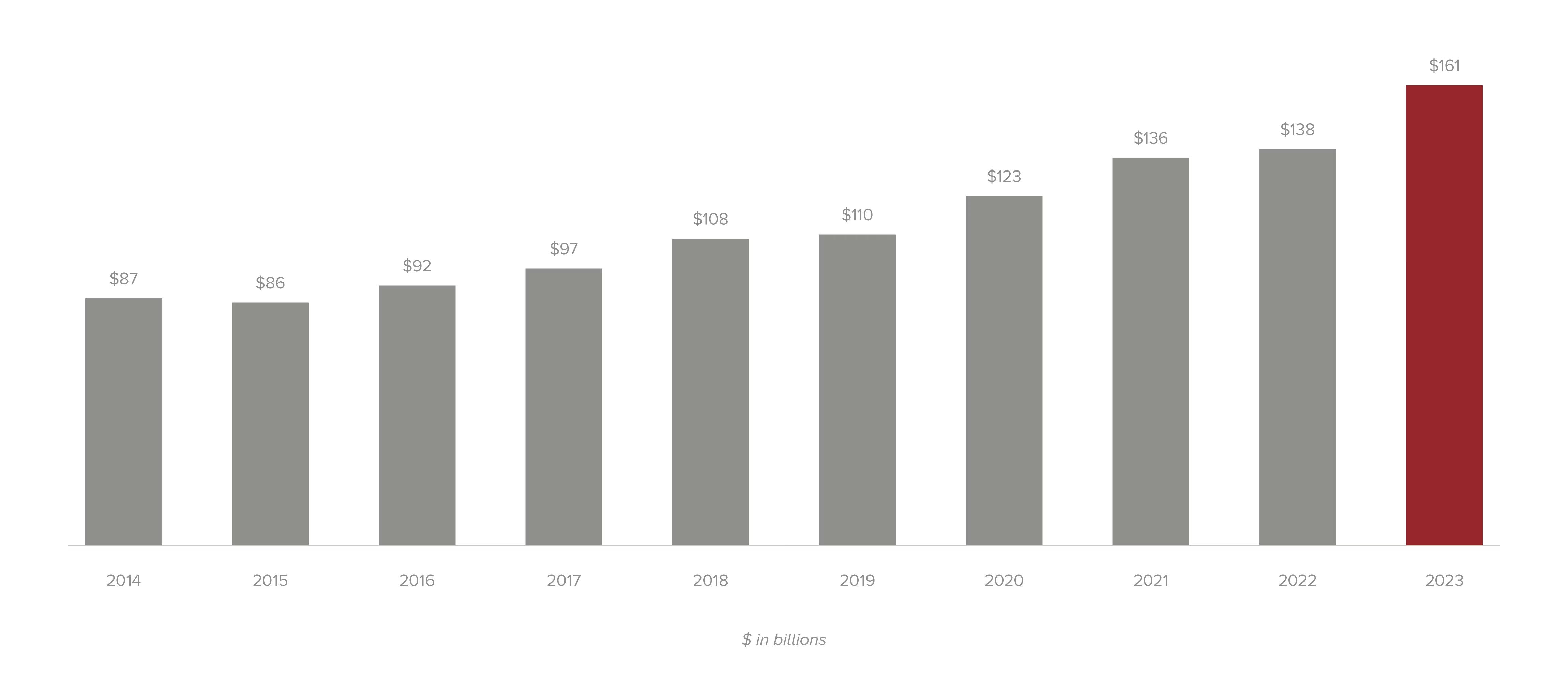
For one thing, innovation continues at a steady pace. Pharma spending on R&D is at record highs and is not slowing down, as these companies need to address a very large and looming patent cliff (Figure 2).
Figure 2: Global R&D Spend by Pharmaceutical Companies
Source: IQVIA Global Trends in R&D 2024
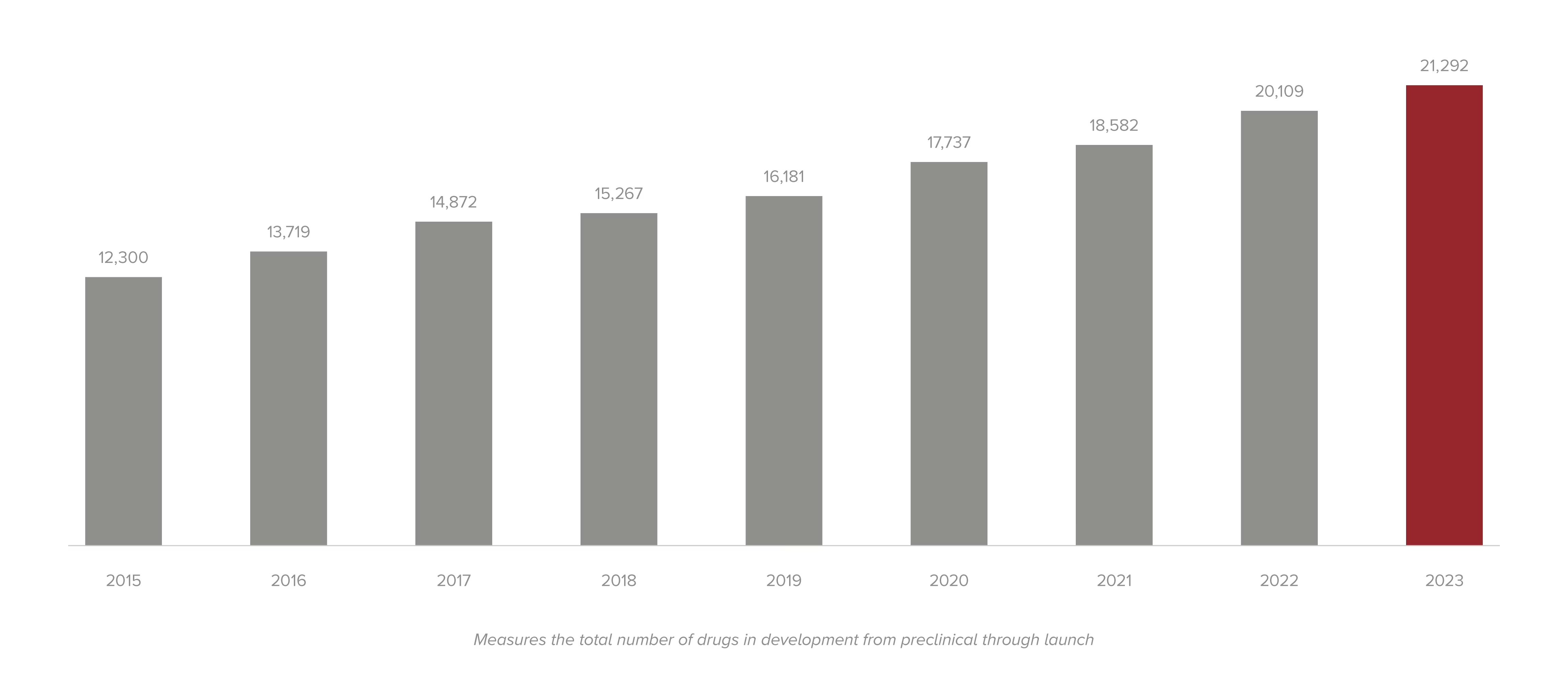
Likewise, the number of drugs in the pipeline is at a record high (Figure 3), and these drugs are becoming ever more complex, targeting ever-narrower populations.
Figure 3: Drug Count in the Global Pharma R&D Pipeline
Source: Citeline Pharma R&D Annual Review 2024
“These are the same fundamental long-term tailwinds that we’ve observed for the past several years, and they remain fully intact,” says Paul Hepper, a managing director.
At the same time, new technology is transforming the sector. Rapid advancements in AI and data analytics are improving the efficiency of biomedical research, from discovery to clinical trials. These advancements drive return on investment in drug R&D, which has seen a meaningful improvement in recent years after a prolonged period of declines.
“What was previously undruggable has now become druggable, and there has been an explosion of new targets with multibillion-dollar revenue,” notes Julian Feneley, a managing director.
Recent clinical data confirms this trend, showing a meaningful uptick in clinical trial starts in late 2023 and early 2024, which will ultimately translate into more demand for clinical and commercial outsourced pharma services (Figure 4).
Figure 4: Uptick in Clinical Trial Starts
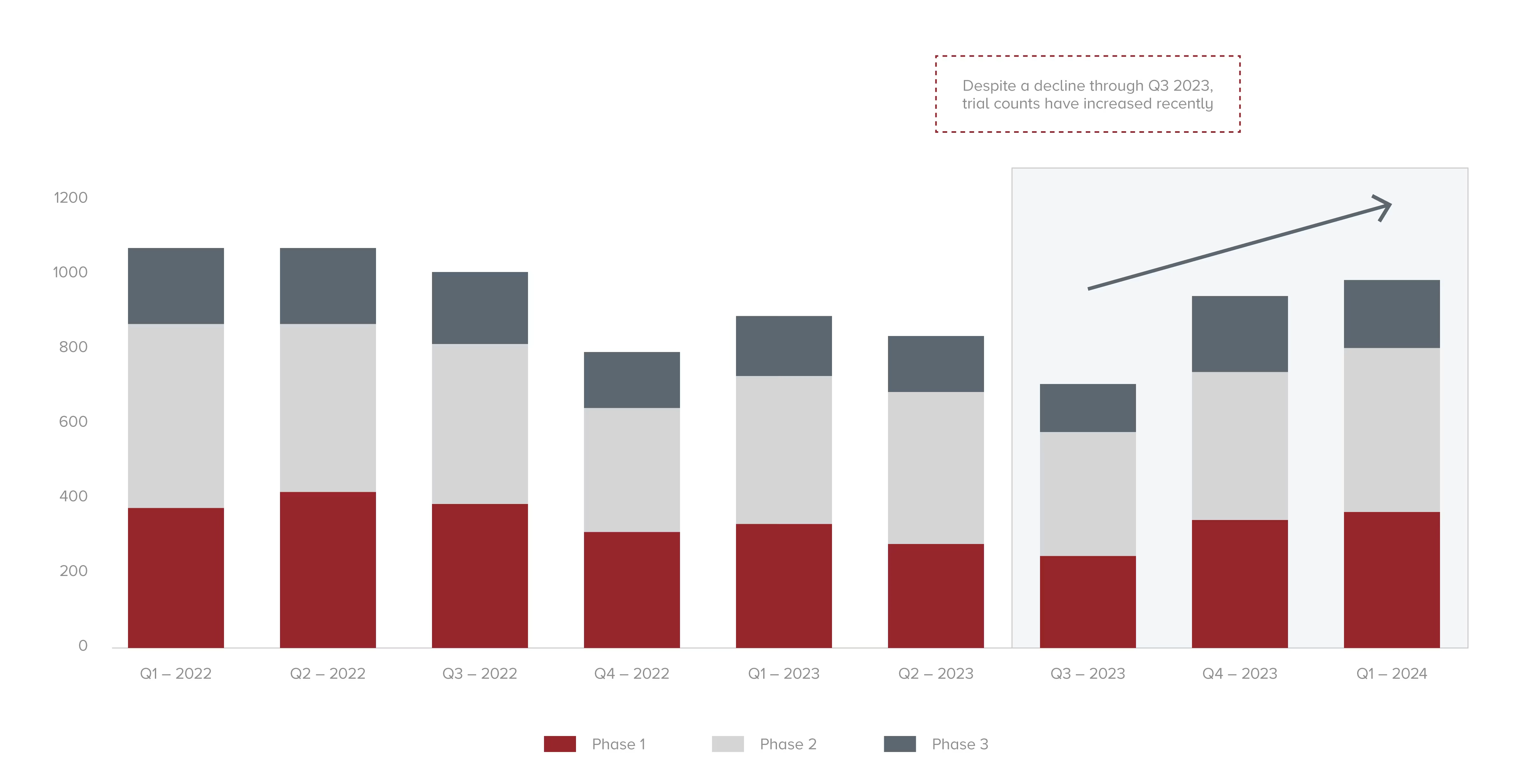
Number of clinical trials, by phase
Source: ClearView Healthcare Partners, Global Data
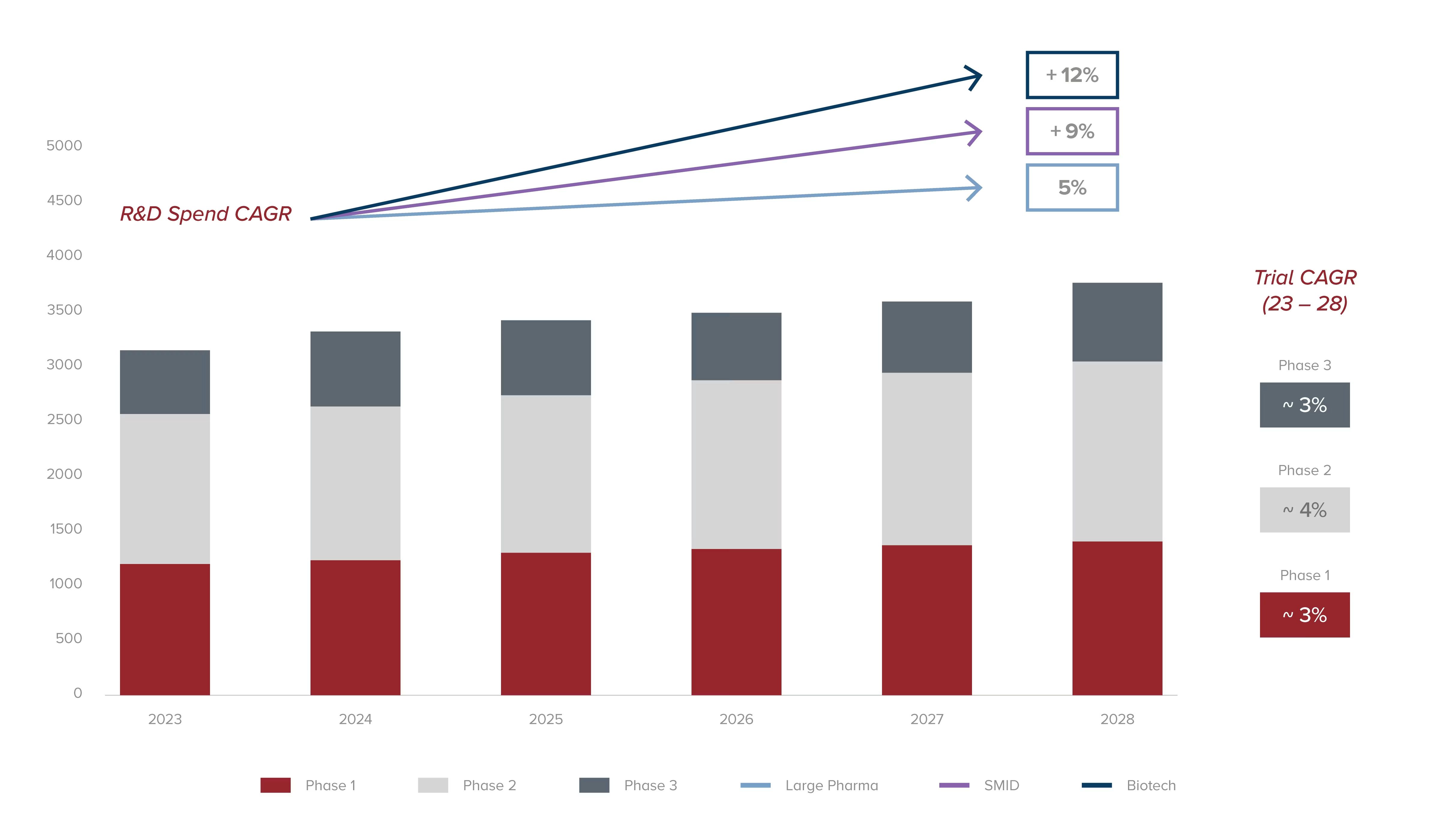
Going forward, R&D spend is expected to increase most rapidly for biotech and small and medium-sized pharma (9-12%) and at a slower pace for big pharma (5%) (Figure 5).
Figure 5: Projected Clinical Trial Starts and R&D Spending (U.S. and E.U.)
Source: ClearView Healthcare Partners, Global Data
To see how these dynamics are playing out among outsourced pharma services companies, Harris Williams recently polled U.S., U.K., and Europe-based executives in the space regarding their expectations for business and sector performance:
Most respondents said that while their customers are more cautious than before, they have not cut budgets and continue to spend on outsourced pharma services.
Reflecting this steady spending, roughly 3 out 4 respondents said 2024 revenue would be higher than 2023, with the rest saying it would be flat.
Likewise, the vast majority said overall company performance would be better in 2025 than in 2024.
However, most respondents do not expect long-term growth rates to return to where they were before COVID-19 (i.e., 15% to 20+% annual organic growth rates) within the next 2-3 years. The prevailing view is that growth will be between 5% and 15% per year during that period, with slightly more respondents leaning toward the higher end of that range.
What does this mean for M&A? “As sellers become more able to show sustained performance improvements and visibility into near-term growth, we expect an acceleration in transactions,” says Andrey Dvorkin, a director. “And buyers with a strong thesis in the sector can gain confidence and readiness to act from the trends we’re seeing. That will be essential to helping bridge any valuation gaps with sellers.”
Overall, a range of indicators suggest that it’s an opportune time for M&A investors to intensify their focus on outsourced pharma services. The sector’s long-term tailwinds are still intact and recent data shows increasing spending on R&D and clinical trials. Outsourced pharma services executives are seeing these forces manifesting as higher revenue, and they expect healthy growth going forward.
"The need for sophisticated medicines is only growing around the world,” concludes Hepper. “Pharma companies want to meet that need more efficiently by outsourcing a wider range of services. And investors have long embraced that opportunity. After this brief pause in M&A in the sector, we’re excited about the next round of growth, innovation, and value creation.”
Please contact us to learn more.